
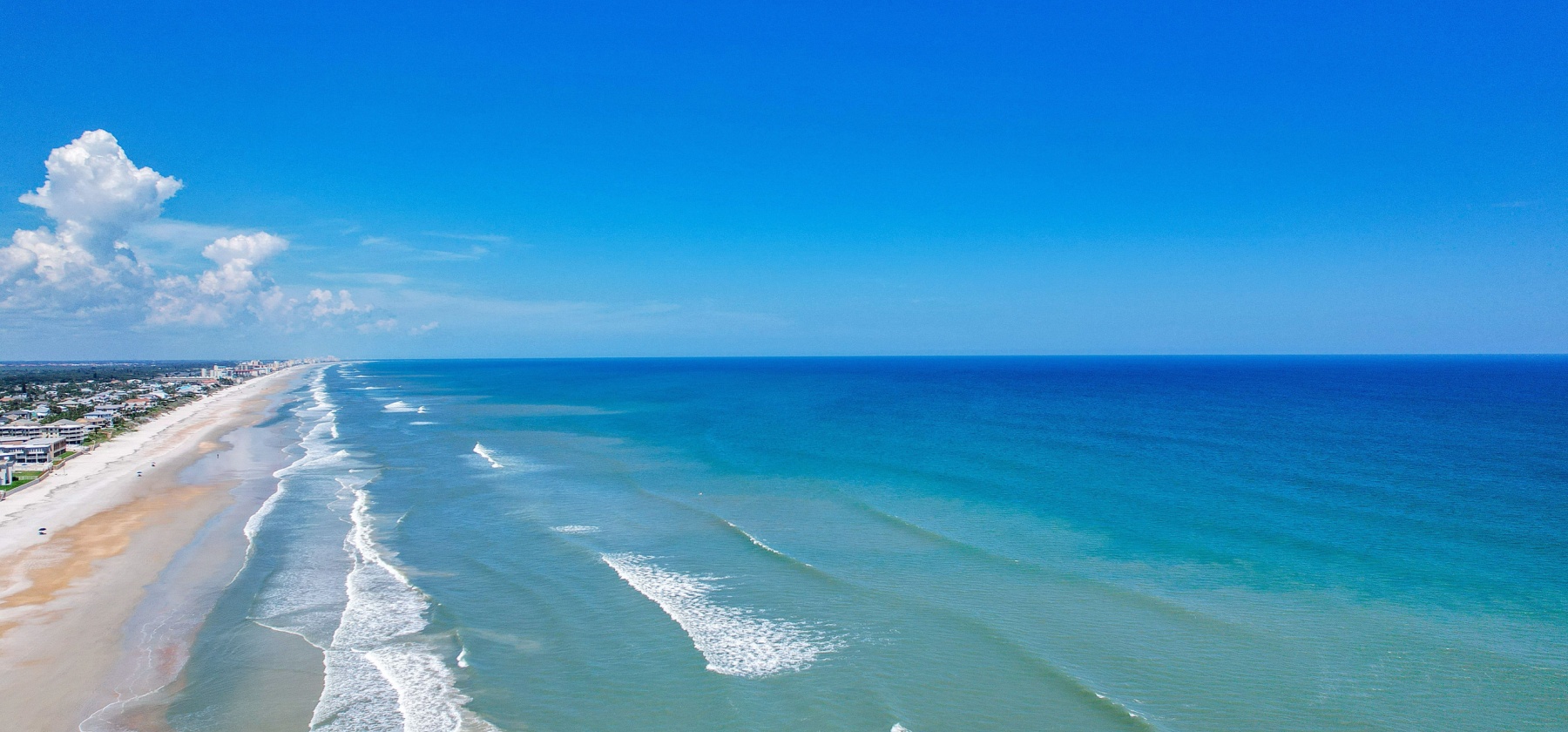
The New Smyrna Beach no-drive beach starts just south of the 27th Avenue ramp and runs south to Canaveral National Seashore. No public vehicles are permitted on this sand. Volusia County designates it a non-driving beach area, and the county's habitat conservation plan keeps public vehicles out of conservation zones to protect sea turtles and dunes. You park in a lot, walk in from the ramp, and get shoreline with no traffic lanes.
Volusia County describes driving on the sand at New Smyrna Beach as a tradition dating back to the early days of the automobile. That tradition covers only part of the coast, though. The driving ends well before the beach does. Go south past 27th Avenue and the traffic lanes stop, while the sand keeps running until it reaches Canaveral National Seashore.
A Quick Hello From Us
At Great Ocean Condos & Homes, we're experts on all things along Florida's Atlantic Coast. Beyond offering stellar oceanfront condos, vacation homes, and pet-friendly rentals, we also share great local tips on our blog to help you plan the best vacation.
You'll find tips on why New Smyrna Beach is underrated, how to explore Daytona Beach on a budget, the art scene, and much more.
Contents
1. Where Does the No-Drive Beach Start in New Smyrna Beach?
2. Why Are Cars Banned South of 27th Avenue?
4. What Sits at the Southern End?
5. What Rules Apply Once You Are on the Sand?
6. Should You Choose the No-Drive Beach?
8. Plan Your Stay on the Quiet Side
Where Does the No-Drive Beach Start in New Smyrna Beach?
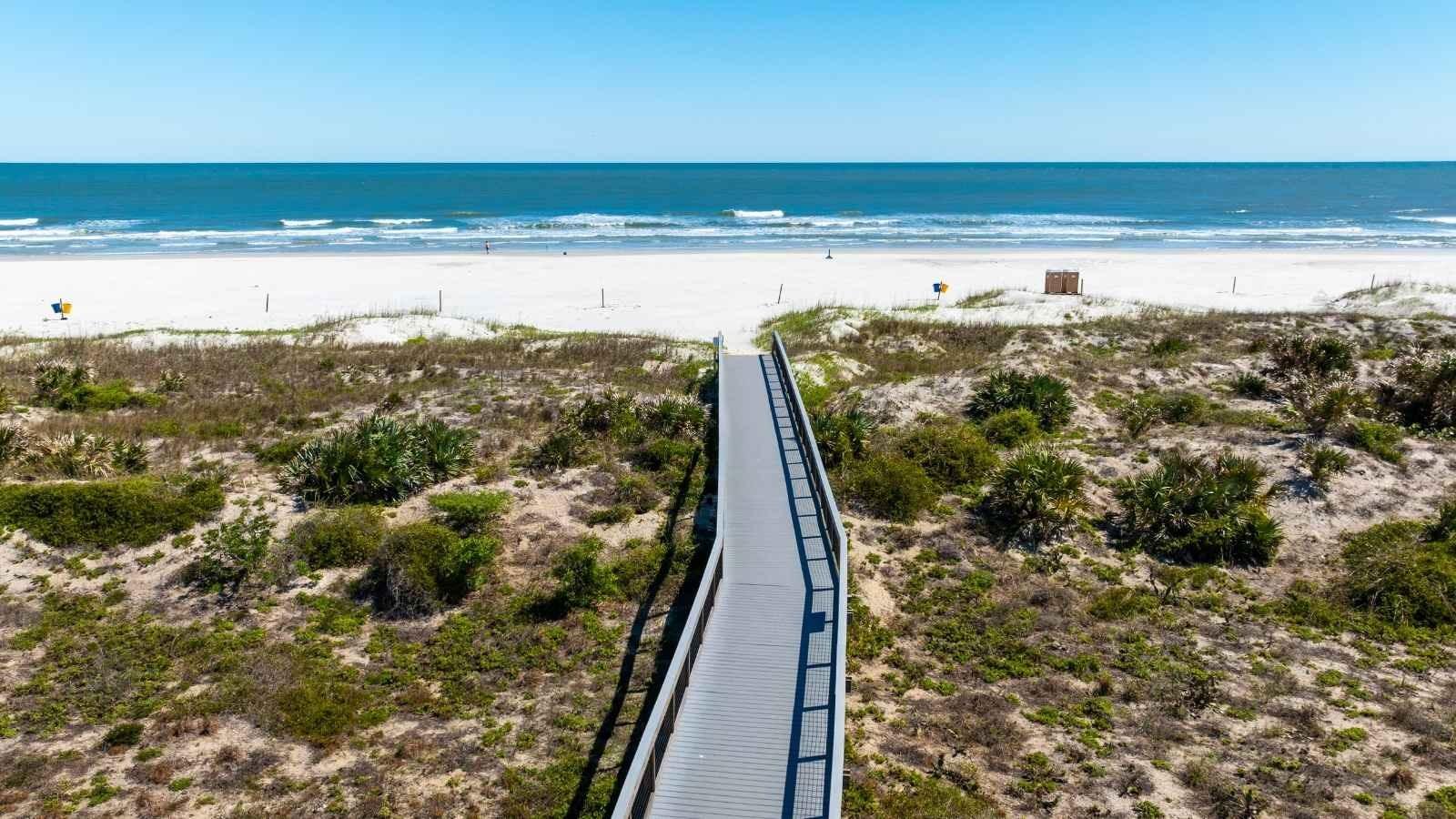
The boundary is 27th Avenue. Volusia County's habitat conservation plan closes the beach from there south to the Canaveral National Seashore line to public driving, designating it a Natural Beach Management Area. The car-free sand runs past Mary McLeod Bethune Beach Park all the way to the park line.
Volusia County confirms the line in its own park records. The county describes the Hiles Boulevard off-beach lot as sitting "in a non-driving beach area," and places it 1.5 miles south of the 27th Avenue beach ramp on the west side of State Road A1A. If you are south of Hiles Boulevard, you are well inside the traffic-free zone.
There's one naming quirk you should know: the city calls this street 27th Avenue, while Volusia County's own documents and park signage refer to 27th Street. It's the same place.
Why Are Cars Banned South of 27th Avenue?
Volusia County chose its three Natural Beach Management Areas because they carry relatively high sea turtle nest densities, and public driving was pushed into the areas where nesting is lowest. This is not a local guideline: the designation sits inside a federal habitat conservation plan.
Volusia County wrote that plan to secure an Incidental Take Permit from the U.S. Fish and Wildlife Service under the Endangered Species Act, and the Service issued the permit in November 1996. The three Natural Beach Management Areas cover 18.9 miles, or 53% of the beaches Volusia County manages.
The numbers back the protection up, as the county's published nesting summary logged 1,516 sea turtle nests on its beaches in 2023 and 902 in 2024.
Where Do You Park?
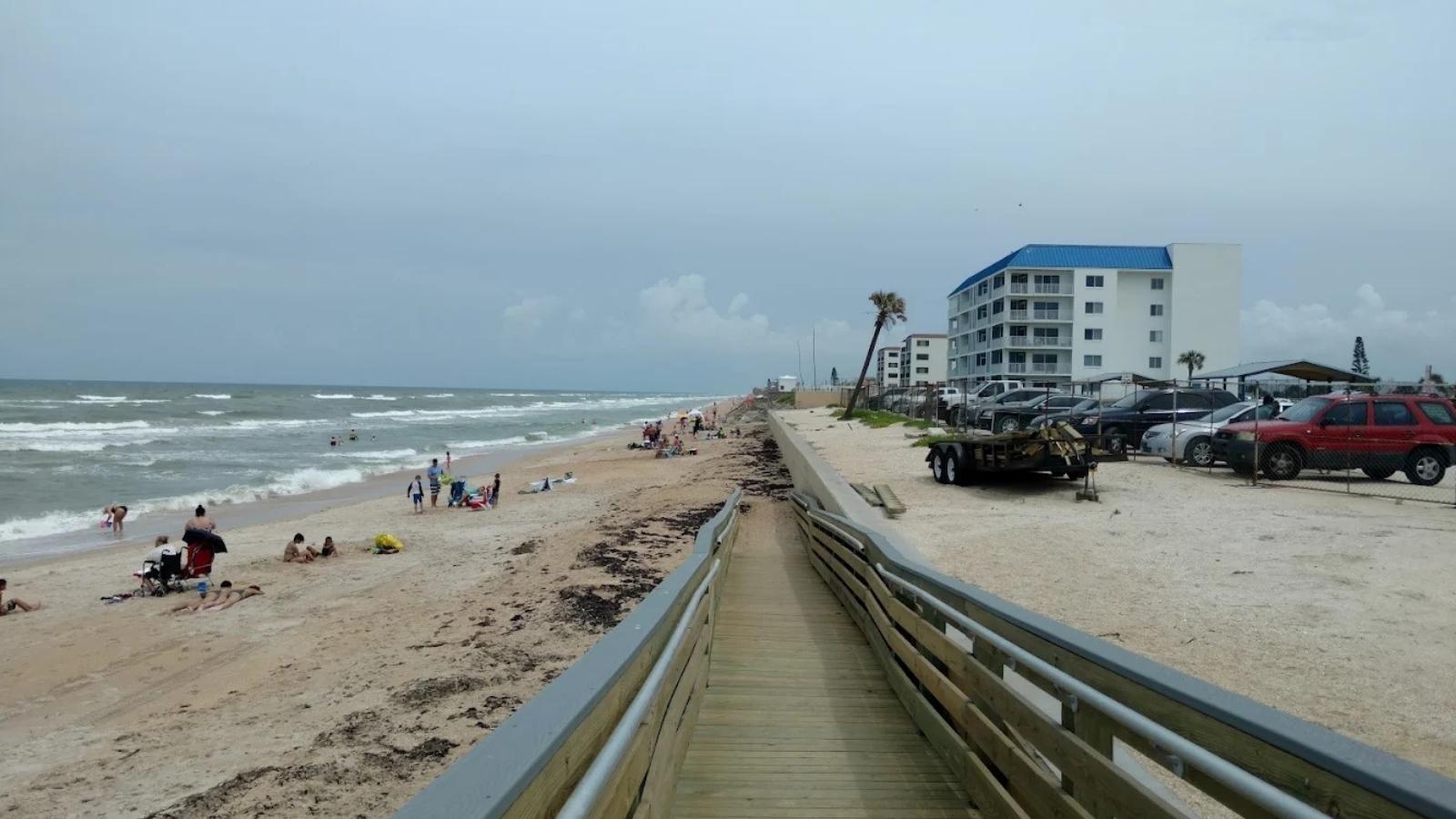
Volusia County runs exactly two off-beach lots on the car-free stretch: Hiles Boulevard Beach Park and Mary McLeod Bethune Beach Park. Both charge visitors $20 a day. The city's 27th Avenue Beachfront Park sits at the boundary itself, and its fees are separate. You don't need a beach-driving pass though, since no vehicle is going onto the sand.
Hiles Boulevard Beach Park comes first as you head south. Volusia County lists it at 4516 South Atlantic Avenue with 226 regular public parking spaces and seven handicapped spaces, plus a public restroom building and outdoor showers. A signalized pedestrian crosswalk connects the lot to the beach ramp, which matters if you're crossing A1A with kids.
Mary McLeod Bethune Beach Park anchors the southern end at 6656 South Atlantic Avenue. The county lists restrooms, large picnic pavilions, showers, and nearly 800 feet of beachfront sidewalk on the ocean side.
Volusia County residents park free once they register a license plate with ParkVolusia, and non-residents can buy a $100 annual pass good for 365 days instead of paying by the day. ParkVolusia permits do not work in New Smyrna Beach's five city-run beachfront lots, though, and 27th Avenue Beachfront Park is one of them. The city charges a flat $20 there.
Walking on is always free. The county's plan states its beaches are open to the public 24 hours a day, 365 days a year, with no restrictions on pedestrian or bicycle access. Restrooms at both county parks open from within an hour of sunrise to within an hour of sunset, and parking is prohibited between 11 p.m. and 5 a.m.
What Sits at the Southern End?
Mary McLeod Bethune Beach Park is the southernmost county park before the national park. Volusia County places it one mile north of the Apollo Beach entrance to Canaveral National Seashore, at 7611 South Atlantic Avenue. Past that entrance, the shoreline is federally protected for 24 miles.
The park honors Dr. Mary McLeod Bethune, who founded Bethune-Cookman University in Daytona Beach. Its riverside half sits a short distance across South Atlantic Avenue and holds tennis, pickleball, basketball and volleyball courts, a playground, a fishing pier, and restrooms. Volusia County describes the river side of the park as a strong spot for viewing manatees, dolphins and pelicans.
The National Park Service counts nearly 58,000 acres of barrier island, lagoon, coastal hammock, pine flatwoods and offshore waters inside Canaveral National Seashore. Entry costs $25 per private vehicle and covers seven consecutive days, and an annual pass for the park is $45. Bring a card, because the entrance stations do not take cash.
What Rules Apply Once You Are on the Sand?
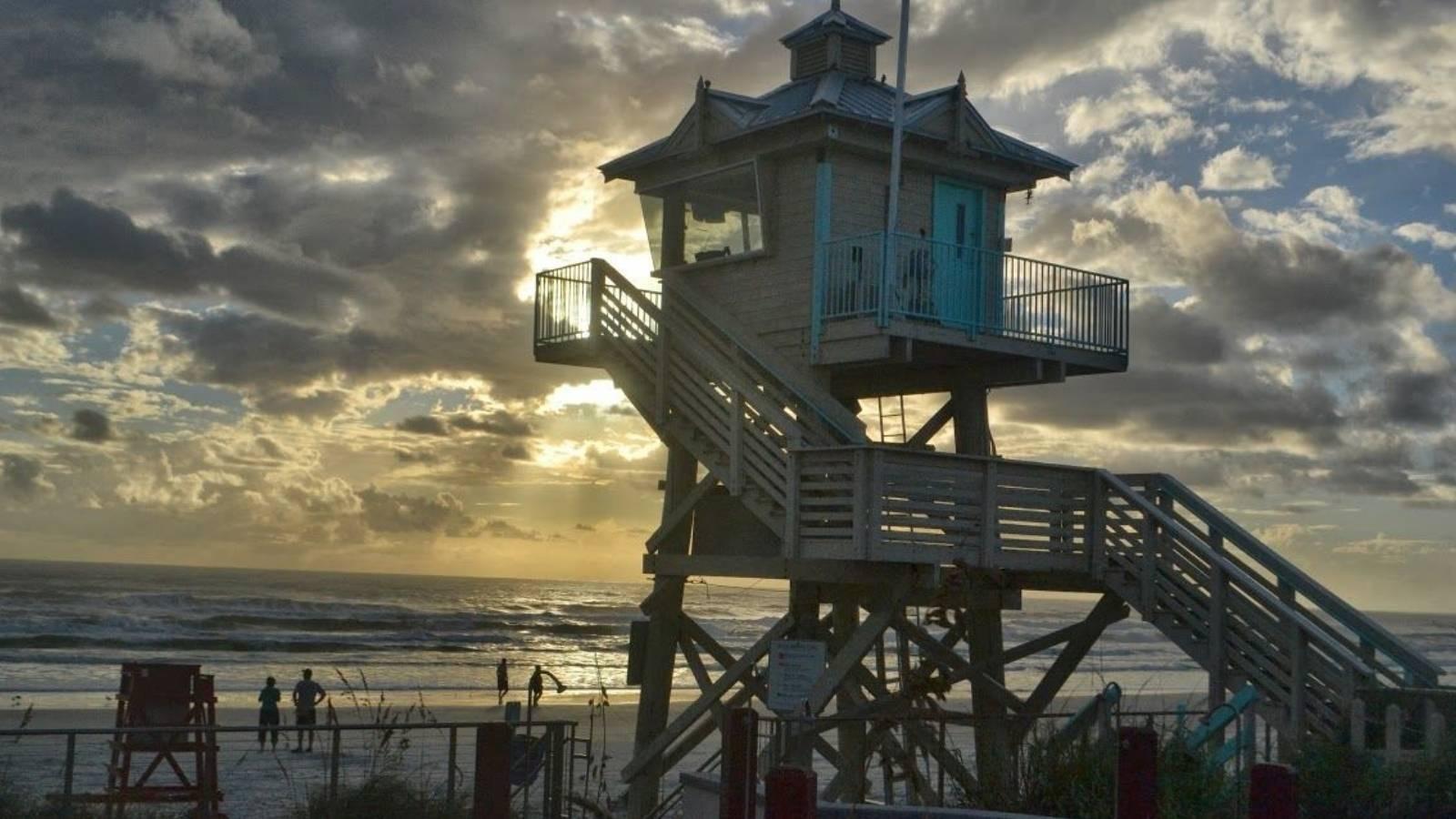
Volusia County's beach rules still apply on the no-drive beach. Alcohol and glass containers are prohibited. Music you can hear from more than 50 feet away is illegal. Grilling is allowed, but you have to carry your charcoal off the beach afterward. Volusia County Beach Safety tells you to swim directly in front of a lifeguard tower.
Tower staffing changes day to day, and the county's Volusia Beaches app shows in real time which towers are staffed. Check it before you pick your spot.
One rule is specific to this stretch. Because it's a Natural Beach Management Area, Volusia County limits special events here to low-impact gatherings like weddings, beach runs and church events. Concerts and tournaments go to the driving beaches.
Dogs are the rule to check before you go. Volusia County allows dogs on four beach areas countywide, and the only New Smyrna Beach location on that list is Smyrna Dunes Park, at the far north end of the island. The no-drive beach is not a dog beach. Canaveral National Seashore goes further and bars dogs from the beach and the beach boardwalks, although the National Park Service does allow them on trails and around lagoon access.
Accessibility deserves the same plain treatment. Volusia County lends beach wheelchairs at no charge, first come and first served, from its lifeguard stations, but the only New Smyrna Beach station on the county's list is Flagler Avenue, which sits inside the driving zone. The county describes Mary McLeod Bethune Beach Park itself as handicapped accessible, including its beachfront sidewalk. It also states outright that there is currently no ADA access down to the sand.
Should You Choose the No-Drive Beach?
Choose it if you want sand without traffic lanes and you don't mind hauling your gear in from the lot. A folding wagon makes that walk-in much easier though. Volusia County's park listing calls this a remote and beautiful beach, and for families with young kids the practical difference is simple: no cars are driving between the dunes and the water.
Frequently Asked Questions
Where exactly does the no-drive beach begin? It begins at 27th Avenue. Beach driving runs from the 27th Avenue ramp north, and everything south of it is closed to public vehicles. Volusia County's habitat conservation plan designates that stretch a Natural Beach Management Area, and the county lists the Hiles Boulevard lot, 1.5 miles south of the ramp, as a non-driving beach area.
Do you need a pass to use the no-drive beach? You don't need a beach-driving pass, because no vehicle goes on the sand. You pay for parking only if you park in a county lot: Volusia County charges visitors $20 per day or $100 for an annual pass, and county residents park free after registering with ParkVolusia. Walking or cycling on is free.
Can you bring a dog? No. Volusia County permits dogs at four designated beach areas, and Smyrna Dunes Park is the only one in New Smyrna Beach. It sits at the north end of the island, not on the no-drive stretch. The National Park Service also bans dogs from Canaveral National Seashore's beach.
Are there restrooms and showers? Yes. Hiles Boulevard Beach Park has a public restroom building and outdoor showers, and Mary McLeod Bethune Beach Park has restrooms, showers and large picnic pavilions. Volusia County keeps park restrooms open from within an hour of sunrise to within an hour of sunset.
Is the no-drive beach wheelchair accessible? Partly. Volusia County describes Mary McLeod Bethune Beach Park as handicapped accessible, with restrooms, showers and nearly 800 feet of beachfront sidewalk, but states there is currently no ADA access down to the sand. Beach wheelchairs are free from county lifeguard stations, though the only New Smyrna station listed is Flagler Avenue, inside the driving zone.
How close is the no-drive beach to Canaveral National Seashore? It runs right up to it. Volusia County places Mary McLeod Bethune Beach Park one mile north of the Apollo Beach entrance, at 7611 South Atlantic Avenue. Entry to the national seashore costs $25 per private vehicle and is good for seven consecutive days.
Plan Your Stay on the Quiet Side
The simplest way to enjoy the New Smyrna Beach no-drive stretch is to stay on it. We manage over 250+ properties on the no-drive beach, browse availability and find the right fit for your trip.